
Individual vs Collective: Personal Rights of Rivers and Robots
You are losing your personhood as natural and artificial objects are taking it instead.

The Virgin vs Data Centres
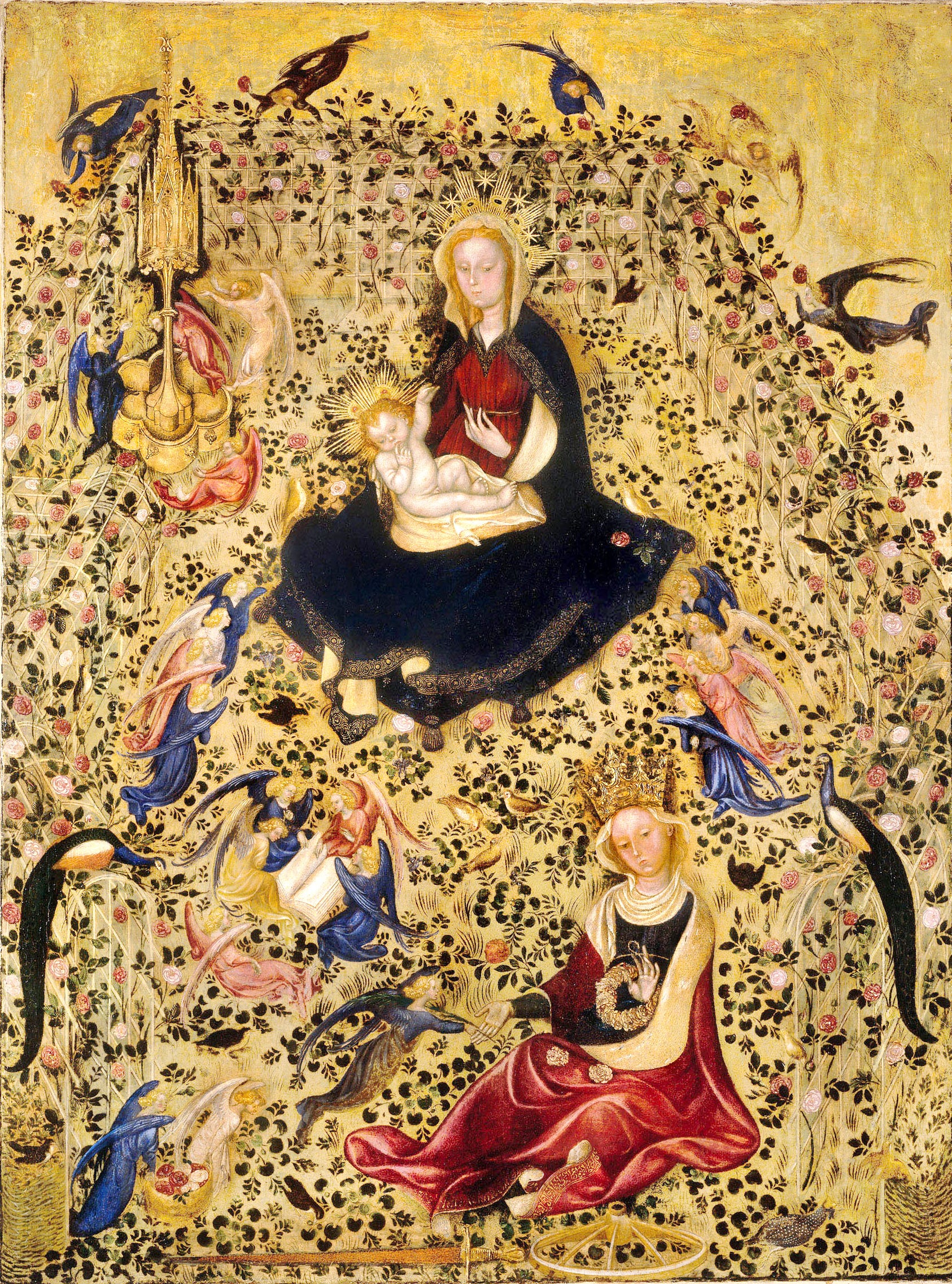
A celebrated dichotomy which represented the 20th century was the Virgin versus the Dynamo. The dynamo has faded in relative power. You might say the Virgin has as well. However the Virgin Mary will prove to be persistent. Today it could be conceived as the Virgin vs. The Data Centres. The latter symbolised the massively-invested and resource-hungry systems that consume electricity and water voraciously to give strategic power to elites who want to govern the world. Resources re-directed could solve many human problems instead of investing in a posthuman world of environmental destruction and societal deconstruction. Elevation of data centres is part of the process which involves robotification evident in China, which needs to find replacement for the children it never wanted. The data centre helps create the new AI God researchers talk of. This massive investment will be accompanied by a growing literature on rights of machines and legal and human personhood is diminished and deconstructed (see my talk on personhood). Not only will humanoid robots gain rights as you lose yours, but so will natural phenomena. This may seem like an advance but is most likely a technocratic ploy despite involvement of good people in the movement. Meanwhile the soda straw will continue to suck and leech resources while we sleep on it.
The movement to give rights to nature is ill-conceived.
Welfare for centuries in Europe was provided by the Church, self-motivated. The 19th century nationalisation and institutionalisation of welfare continued the Reformation removal or reduction of the Catholic Church from education and hospitals. That self-motivated welfare based on charity and Christian ideas was rejected as the state assumed control of the systems they developed. Modern systems are fantastic at appropriating existing infrastructure and then attributing the underlying trajectory to modernity itself. Thus science created medicine for example and had nothing to do with centuries of experience. That system in which science and technology with scientism becomes power itself - represents a serious threat. We encounter a vicious circle of seduction by technique as well as binding thereby, which are related to a movement away from God, nature, proportion and human focus. Relinquishment of commitment to anything beyond power itself or submission to the techno-scientific process gives an appetite for more. The aspect of science and technology likened to magic can become sorcerous in that it becomes an effort not to maintain balance but an endeavour to disrupt it.
Guardini put is thus in a chapter entitled ‘The New Concept of the World and of Man.’
“The greater a man’s power, the stronger the temptation to take the shortcut of force: the temptation to nullify the individual and his freedom, to ignore both his creative originality and his personal truth; to achieve the desired end simply by force, dismissing what cannot be forced as not worthy of consideration - in other words, the temptation to erect a culture on rational and technical foundations alone. To this end, man himself must be considered something “marketable” (“the labor market”), something » that can be “managed”- i.e., “laid off or on,” “conditioned” from the start to certain ends. Even spiritually man is malleable, once dialectics and mass-suggestion, propaganda and Weltanschauung or historical perspective, even legal testimony are undertaken not with respect for truth, but to support predetermined ends. Then the truly spiritual, that tension between the beholding, judging human being and that which he beholds, the valid, lies slack.”
There is a fundamental rift between conceptions of justice manifest within Catholicism and elsewhere. This dichotomy leads to two moral senses and anthropologies with alternate senses of reality. It relates to the foundation of the approach to issues that affect society in a general way. This has been discussed endlessly but it must be noticed in a simple way. The split relates to primacy of the individual or collective in the identification of justice. The dominant emphasis in Catholicism is on the individual as the starting point from which general issues such as the common good are approached, latterly with ideas of ‘solidarity.’ From that base, social justice is built. That contrasts with the approach which begins with the collective sense of justice. The individual base is determined by a sense of a vertical orientated divine order which conditions the individual. The latter emphasis is more focused on the empirical, mundane and horizontal-orientated order. This has enormous implications.
The distinct starting points often lead to different destinations. The Catholic foundation depends on a very clear idea of personhood. The person is the critical moral unit who is accountable, responsible and the location of rights given by God. This does not deny social justice but locates the basis and direction or vector therefrom. The social construction is predicated on the individual base and that coherence induces another level of social coherence which facilitates social justice in a cohesive manner. Freedom is related to moral agency and does not imply the licence of extreme selfish individualism but opportunity for alignment with God and your neighbour. Equality is recognition of the distinct dignity of each individual which then altered society through incorporation into legal institutions as a core concept. This equality is far more persistent than any equality which is solely determined by a set of conditions which limit its applicability thereto. Such equality which also is related to outcomes, denies human choice in favour of a constructed equality.
What difference does it make? The greatest problem that flows from the alternative bases relates to the concept of personhood. Catholicism starts off therefrom. It builds on the idea of the Incarnation to reinforce the location in the human person and their heart and mind of the critical fulcrum or orientation of justice itself. Near Death Experiences and the life review seem to vindicate the important source or core of justice as interpersonal, like the Good Samaritan. From there, expectations and example can reinforce human goodness, empathy and compassion. The metaphysical, essentialist, transcendent orientation and extrapolation contrasts with a utilitarian, empirical, social-structure and construction approach. It requires recognition of a set of rights and duties, obligations and orientations that claim objectivity. Such objectivity precludes the relativism, conditionality and context-dependence of socially constructed entitlements. The collectivist approach assumes disregard of the individual, will result in a collective benefit to compensate the cost. The problem is that personhood can never be recovered in a comprehensive way.
The distinct bases are manifesting in ideas of personhood being applied to nature. Wouldn’t it be better some say if we give rights to rivers, forests and so on? This can be based even on re-articulation of theology. Then environmental and climate justice can be obtained and the collective will benefit. I am very much in favour of protecting water, woods, habitats, flora and fauna, cultural heritage and so on. But to jettison the concept of the human person and dilute traditional ideas of personhood in an effort to protect the conditions in which they operate - is misconceived. The dangerous consequences of this approach are not only to present a collectivist approach which is open to the individual, but it is potentially calculated to eradicate the human person as a viable moral unit of consideration. Furthermore, if we examine hyper-capitalist, corporate think-thanks, we see there is a great interest in appropriating nature itself. Vague, half-baked, feel-good dispositions which appear to address complex problems but do not and betray shallow philosophical bases - can be hot-air harnessed to drive the new posthuman, techno-matrix. The evolution of rights in its modern form was heavily dependent on their Greco-Roman, Celtic and Jewish sources integrated into a Catholic worldview influenced by Thomistic metaphysics. The later human rights turn took that intellectual infrastructure with an effort to enhance social-engineering. This can be seen in the input of H.G. Wells in later human rights. The man who thought the Bolsheviks were not radical enough and who wrote the book about the New World Order, as well as one encouraging the bombing of Rome - is no great inspiration. He wanted a scientocracy and there are many useful idiots who will help him because they lack any sense of jurisprudence or philosophy.
Rivers and water sources should be protected. We should be good stewards of creation and evolution of the environment as an inherent natural law embedded in a wider sense of order. But the river is not responsible morally and is not a moral agent. We should respect and understand it for what it is and its own unique nature. To try and take moral and categorical concepts and apply them inappropriately is an ideal way to muddy the waters. This confusion suits Big Business Bolshevism whilst being camouflaged as compassion. Ironically in Medieval Europe, animals were often recognised as legal agents, as diverse literature shows. A swarm of bees might be subject to a court order. Those unique examples must be read in a very committed complex of focus on the human in a divine order. But the context in which present philosophical prodding emanates is one which suits corporations who do not recognise humans as critical persons in their march towards transhumanist technocracy. Robots will be regarded as legal persons soon enough as we fall into oblivion of our own delusion.
The Virgin or Mother Mary personified motherhood, life, care, loyalty, higher intelligence, receptivity to creation and God. The data centre symbolises exteriorisation of human potential, behaviour and intelligence. They are part of a network which spins human output into a ‘net’ or ‘web’ which binds its original producers. Data centres would be an Ahrimanic focus in terms of Steiner or a representation of the incipient Solid-State Entity for Lilly. The shiny children of the mechanical matrix will be the apparently autonomous machines and robots increasingly presented as persons. Thus a simulacrum of the divine matrix will produce a new matrix and new ‘creation.’ It will even present a new God. That is also appearing through the insane race in biotech and synthetic biology to create new life through the gold rush of gene-editing facilitated by the protein deciphering advances enabled by AI. Collective justice will be used to deny justice to the human individual.
Thanks for reading Reflections on Revolution & Revelation!
To help spread my message, please share;
To not miss an article, subscribe for free below and receive new posts to your inbox;
Book Recommendations
My latest book, Trotsky vs Jesus was released in Spring of this year. I think it is my most important book so far. If you are looking for a shorter more general read, the introduction to my series of non-fiction books, Empire of Scientism is a good place to start. To find out what AI will mean for the world - read AI-Govnerveance.
My latest novel is Ireland I Don’t Recognise Who She Is. Never did I think the title would become so prescient as quick as it did. My first novel is a more complex read but I am very happy with it, Blue Lies September.
If you prefer poetry, have a look at Mystic Murmuration or Secret Orchestration.
A complete set of links to all my non-academic books are available on my main page. There is also a link to my Amazon page in the about section.
Good luck and God bless! ☘️
Let me know your thoughts and leave a comment!
📣 This post contains marketing as images or links to my art or books could be classified as ads under EU law, even when included for reference, inspiration or illustration. 📣
Another excellent article, my friend. It's sharp, and I assume that you are correct about it all.
Now, perhaps you'll consider some expansion points: we're talking about AI powered globalism, right? But ai, in its present and future iterations, is not responsible for the creation of globalism. Imperialism empowered by the Techne is more root cause, isn't it? Which takes us to the top of the arrow: scientific imperialism. James, to me, we have to go towards deep psychology to bring some of the anchor points of this entire scheme to the surface. Why point towards the distopian future when it's already right beneath our feet? From soil carbon architecture as the basis of biospheric integrity (climate) to currency control models, we have some serious institutional support for ai globalism that I think we need to have a hard look at.
I'm listening to your discussion with Dean Rickles on stopping the machine, and I was struck by your rose dreams and lucid dreams. Clemens G. Arvay, who sadly couldn't take being villified over his thoughts about public health during the pandemic, wrote The Biophilia Effect, which I bought and read to support his family and to honor him, and he writes about mothers and roses. "Everyone recognizes the smell of the substance called indole in rose blossoms from their mother's body. Decomposing substances in amniotic fluid lead to the formation of indole , which comes into contact with our senses through our mouth and nasal mucous membranes when we're in the womb. Indole in pure form doesn't smell like roses, more like overripe fruit. Only after combining with many other substances is the rose fragrance cocktail produced. However we are unconsciously recognizing the scent of the indole because of our prenatal past. It sounds strange but the rose actually arouses preconscious memories of our time in our mother's womb.' (p.140)
and we have ee cummings https://www.poeticous.com/e-e-cummings/if-there-are-any-heavens
In the realm of the nonlocal nontemporal, the timeless realm, the mother, who will become the Virgin Mary and roses and the tilpa of Guadalupe which plays an ethereal music, begins in the move from the forest to the savannah, bipedalism, the young born earlier, unable to cling, the mother hominin laying the infant down to gather, call and response, and in that, according to the late Frederick Turner and the rogue anthropologist Ellen Dissanyake, begins music, poetry, ritual, community. There begins Mary, a gift to us from the unfathomably intricate intelligence of the cosmos, which knows the furnace of hubris, greed, sex, status madness etc. is somehow necessary but terrible, horrifying, and almost unendurable.
Here's Turner on poetry 40 years ago, so prescient, though it seemed pretty absurd at the time.
The Neural Lyre https://www.poetryfoundation.org/poetrymagazine/browse?volume=142&issue=5&page=64
I am really getting so much from all your talks with Mishlove and others, so much gratitude.